

Across the global woodworking industry, a common frustration is growing louder: factories are working harder than ever, yet margins continue to shrink. Order volumes fluctuate, customization increases, and labor costs rise—but productivity does not keep pace. For many furniture manufacturers, the problem is no longer about demand, but about how efficiently that demand can be fulfilled.
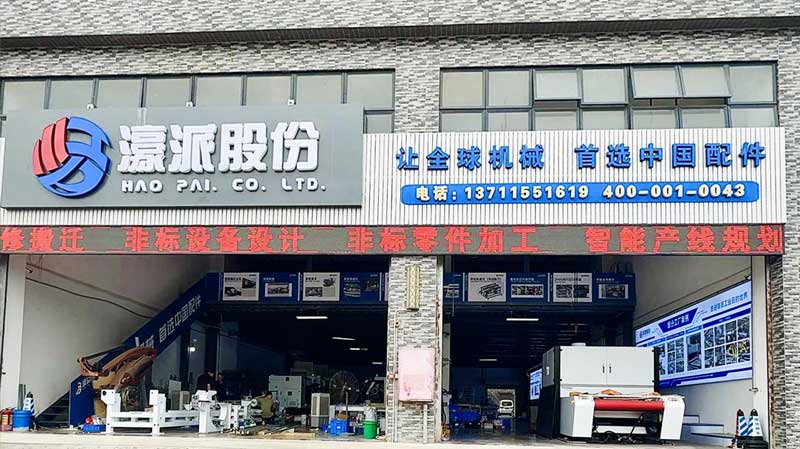
This is where Foshan Haopai Mechanical and Electrical Equipment Co., Ltd. steps in—not simply as a parts supplier, but as a technology-driven partner delivering full-chain automation and digital transformation solutions.
Industry Pain Points: Why Furniture Factories Feel “Busier but Less Profitable”
Despite investments in machinery, many factories still operate under outdated production models. The core challenges typically include:
1. Fragmented Production Systems
Different machines operate independently without data integration, creating bottlenecks and inefficiencies. Information cannot flow across departments in real time.
2. High Dependence on Skilled Labor
Manual adjustments, machine setup, and troubleshooting rely heavily on experienced workers, making production unstable and difficult to scale.
3. Frequent Downtime and Maintenance Issues
Aging components and inconsistent quality of spare parts lead to repeated failures, increasing both direct repair costs and indirect production losses.
4. Poor Adaptability to Custom Orders
As furniture shifts toward customization, traditional batch-based production struggles to keep up with smaller, more complex orders.
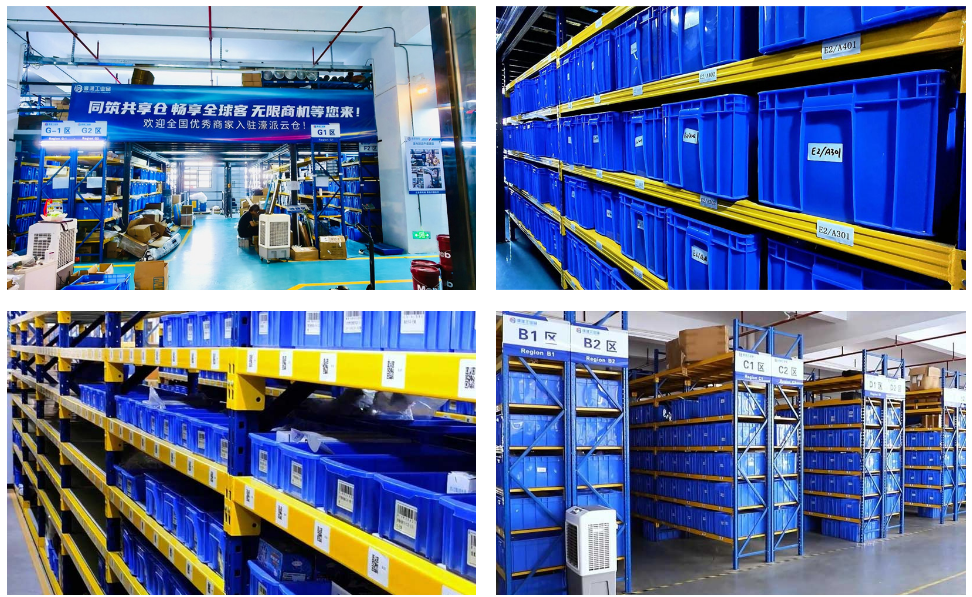
From Trading to Technology: Haopai’s Transformation Advantage
Foshan Haopai began as a woodworking machinery parts trading company. Over more than a decade, it has evolved into a comprehensive technical enterprise integrating:
Woodworking machinery parts supply
Equipment upgrading and retrofitting
Non-standard automation solutions
Product R&D and intelligent production planning
This transformation gives Haopai a unique edge: it understands both the component-level details and the system-level challenges of modern factories.
The Solution: Full-Link Automation and Digital Integration
Haopai’s approach is not about isolated upgrades—it focuses on building a connected production ecosystem.
1. Equipment Retrofitting for Performance Stability
Instead of replacing entire machines, Haopai upgrades key systems such as control units, feeding mechanisms, and drive components. This significantly improves machine reliability while reducing investment costs.
2. Non-Standard Automation for Real Factory Needs
Every factory is different. Haopai develops customized automation solutions that match specific workflows, enabling smoother material handling, synchronized operations, and reduced manual intervention.
3. Digital Integration for Data-Driven Production
By connecting machines, sensors, and control systems, Haopai enables real-time monitoring of:
Equipment status
Production progress
Quality data
This forms the foundation for predictive maintenance and intelligent decision-making.
4. Intelligent Spare Parts Strategy
High-quality, compatible components ensure longer service life and lower failure rates, stabilizing the entire production line.
Performance Impact: Measurable Improvements After Automation Upgrade
| Key Indicator | Traditional Factory | After Haopai Upgrade |
|---|---|---|
| Production Efficiency | Baseline | +40% to +60% |
| Machine Downtime | Frequent | Reduced by 30–50% |
| Labor Requirement | High | Reduced by 20–35% |
| Order Response Speed | Slow | Significantly faster |
| Product Consistency | Variable | Highly stable |
These improvements are not theoretical—they reflect real outcomes achieved by factories that have adopted integrated automation solutions.
Value Beyond Efficiency: What Factories Really Gain
1. Lower Long-Term Operating Costs
By reducing unplanned downtime by 30%–50% and cutting emergency repair frequency by up to 40%, factories can significantly lower maintenance expenses. In addition, optimized workflows and standardized components typically deliver 15%–25% savings in annual operating costs, especially in labor and spare-part consumption.
2. Increased Production Flexibility
With automated and integrated systems, production changeover time can be shortened by 50% or more, enabling factories to seamlessly switch between large-volume orders and small-batch customized production. As a result, order handling capacity can increase by 30%–45%, without compromising efficiency.
3. Improved Product Quality
Through stable process control and precision automation, defect rates can be reduced from industry averages of 3%–5% down to below 1%. At the same time, consistency across batches improves significantly, leading to a measurable increase in first-pass yield (FPY) by 10%–20%.
4. Stronger Market Competitiveness
Faster production cycles—often shortened by 20%–35%—combined with improved delivery reliability (on-time delivery rates reaching 95%+) enhance customer satisfaction. These improvements directly contribute to higher repeat order rates and stronger brand positioning in competitive markets.
Technical Backbone: Why Haopai Delivers Reliable Results
Haopai’s strength lies in its integrated technical system:
Independent R&D capabilities
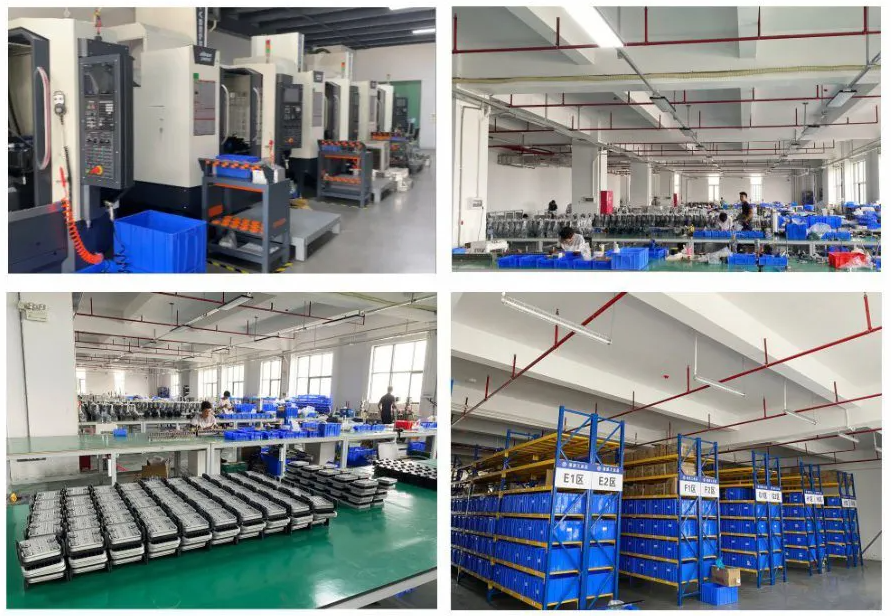
Component assembly and testing workshops
Equipment commissioning and machining facilities
On-site technical support and after-sales service
This end-to-end capability ensures that every solution is not only well-designed but also practical and reliable in real production environments.
Industry Trend: From Automation to Full Digitalization
The woodworking industry is entering a new phase. Automation alone is no longer enough—factories are moving toward full digital integration.
Future-ready factories will be defined by:
Connected production systems
Real-time data visibility
Predictive maintenance capabilities
Flexible manufacturing for customization
Companies that fail to adapt risk falling behind, while those that invest in integrated solutions gain a clear competitive advantage.
FAQ:
Q1: Is automation suitable for small and medium-sized factories?
Yes. Modular upgrades allow gradual implementation without disrupting production.
Q2: Do we need to replace all machines?
No. Retrofitting existing equipment can deliver significant improvements at lower cost.
Q3: How long does it take to see results?
Most factories observe noticeable improvements within 3–6 months.
Q4: Is customization difficult to manage with automation?
On the contrary, automation improves flexibility and makes customization more efficient.
Q5: What is the biggest benefit of digital integration?
Real-time data enables better decision-making, reducing risks and improving overall efficiency.
Call to Action
If your factory is experiencing rising costs, unstable production, or difficulty handling customized orders, it may be time to rethink your production strategy.
Foshan Haopai Mechanical and Electrical Equipment Co., Ltd. offers practical, results-driven solutions tailored to your real operational needs.
Conclusion: From Hard Work to Smart Production
Working harder is no longer the answer. In today’s competitive environment, the key is working smarter.
By combining automation, intelligent components, and digital integration, Haopai helps furniture manufacturers move beyond traditional limitations—transforming production lines into efficient, flexible, and future-ready systems.
For factories ready to double efficiency and regain control over their operations, the path forward is clear: upgrade, integrate, and digitize.
