

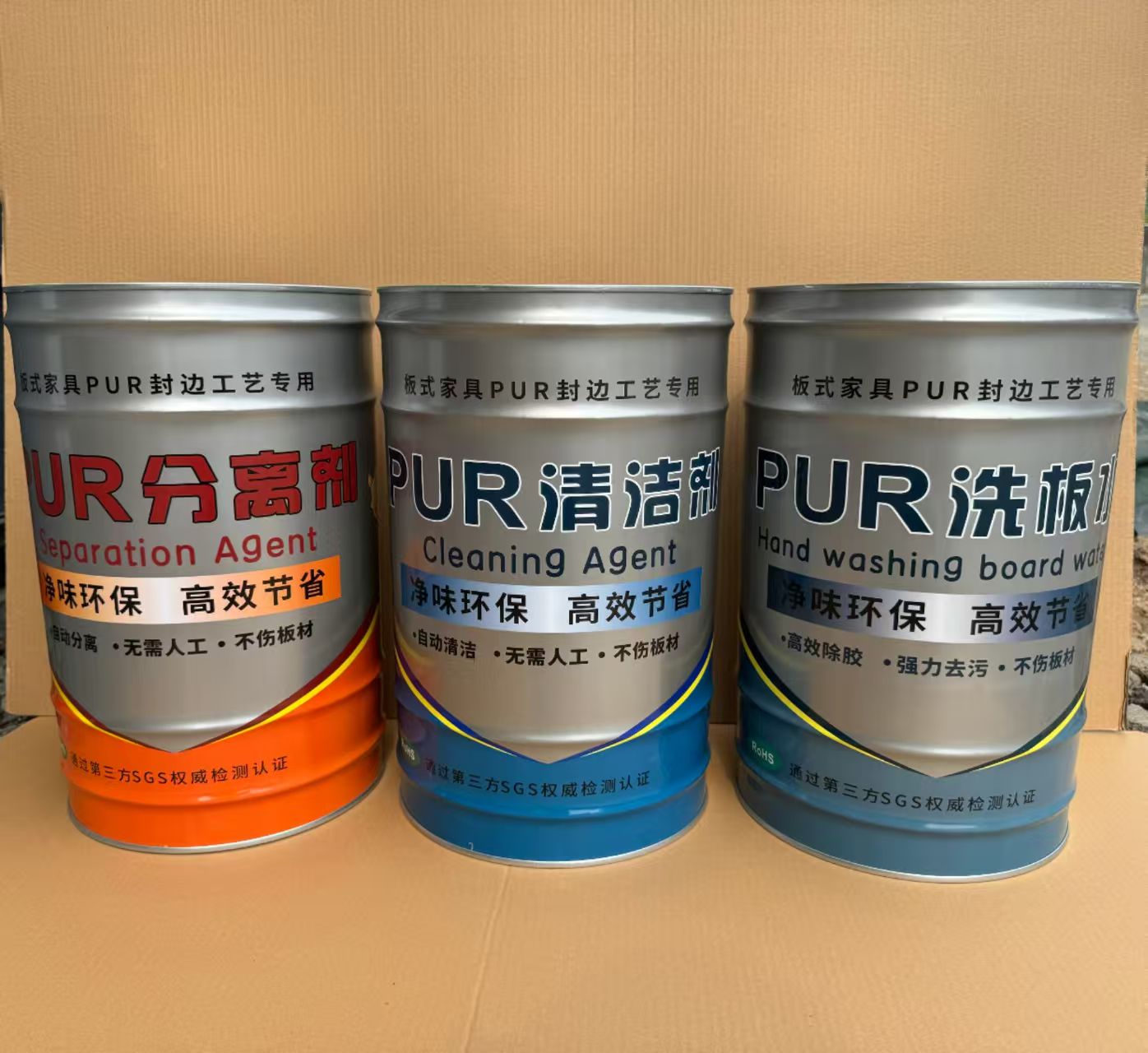
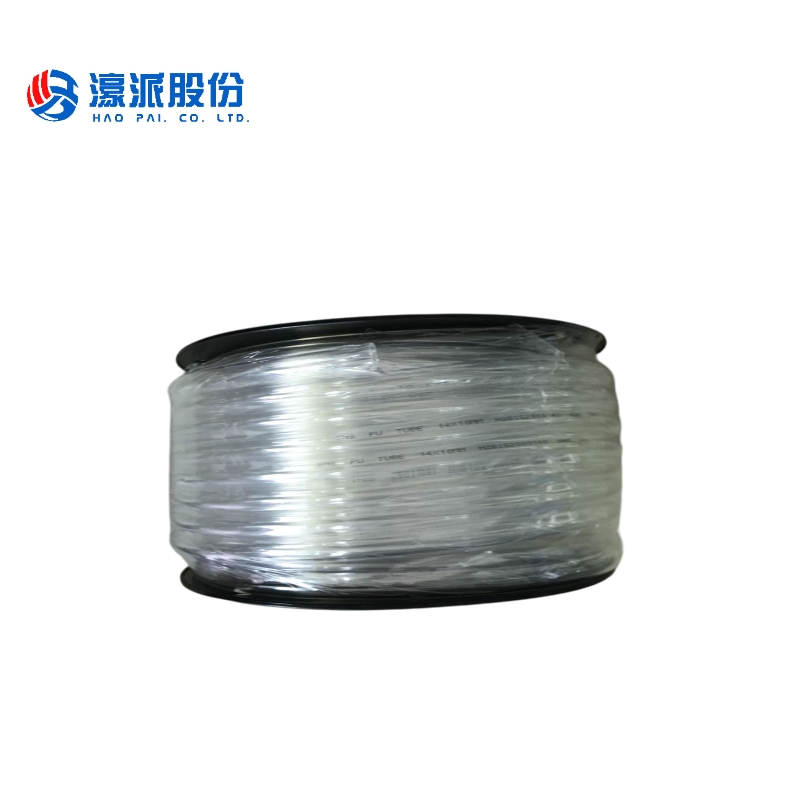
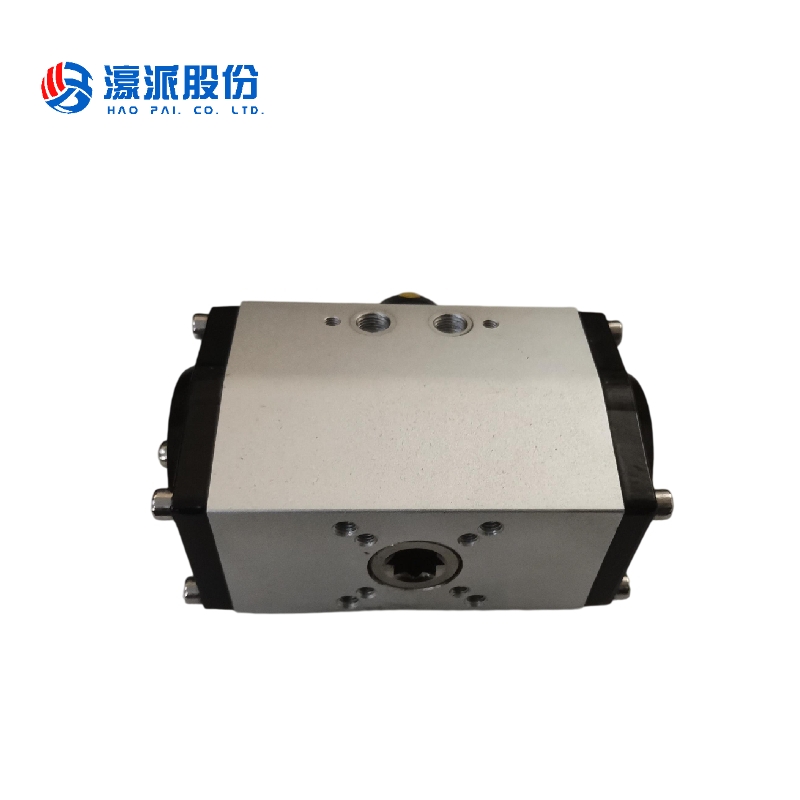
The global workshop floor tells a familiar, and increasingly precarious, story. A German-made panel saw grinds to a halt in a Chinese factory, its precision-ground guide rail worn beyond tolerance. A Taiwanese CNC router in a Vietnamese plant sits idle, waiting for a proprietary Italian spindle to arrive by air freight. The production manager faces a brutal calculus: a 10-week wait for the OEM part at an eye-watering price, or a risky gamble on an untested local substitute. This dependency is more than an inconvenience; it's a strategic vulnerability in an era of shifting trade winds and supply chain tremors. Across the world, manufacturers are asking a pivotal question: What solutions promote localization replacement of high-end woodworking machinery parts? The answer is emerging not from a single product, but from an ecosystem of precision engineering, strategic inventory, and deep technical partnership—an ecosystem pioneered by forward-thinking enterprises like Foshan Haopai Mechanical and Electrical Equipment Co., Ltd.
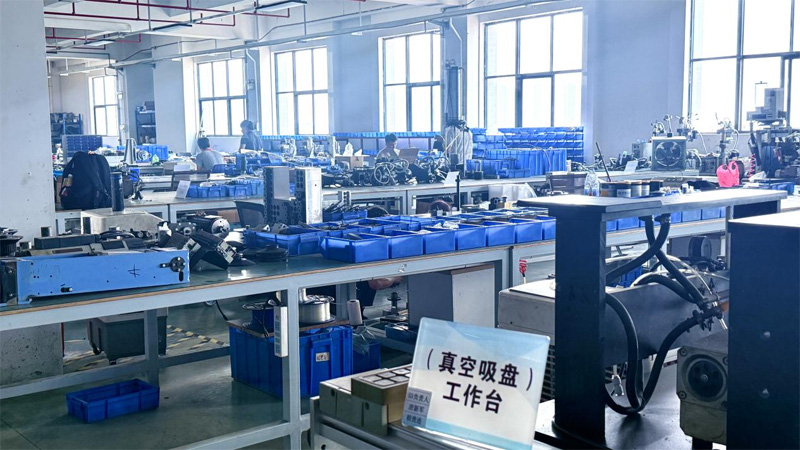
Haopai’s journey from a trader of components to a “National High-tech Enterprise” is a blueprint for this very transition. They began by navigating the maze of international parts procurement, learning firsthand the pain points of lead times, opaque pricing, and compatibility guesswork. This experience forged a mission: to build a parallel, sovereign supply chain of equal quality and superior agility. Their evolution into a firm with its own R&D base, machining workshops, and a portfolio of patents signifies a move from merely distributing parts to actively engineering their replacement. They are not just selling Woodworking Parts; they are providing a cost control solution rooted in technological independence.
The High Cost of Dependency: Why Localization is No Longer Optional
Reliance on imported high-end components carries a multi-faceted burden that extends far beyond the invoice price:
The Tyranny of Lead Time: When a critical Cutting Equipment Part fails, production stops. Waiting 8-12 weeks for an OEM part from Europe can mean forfeiting crucial orders and eroding customer trust. This downtime cost often dwarfs the part's price tag.
The Monopoly Premium: OEM parts pricing often operates in a vacuum of competition. The lack of viable alternatives allows for significant markups, turning routine maintenance into a major capital drain and stifling cost control solution efforts.
The Obsolescence Trap: Machinery manufacturers may discontinue support for older models, rendering expensive equipment into paperweights for want of a single, unavailable component. This planned obsolescence forces premature capital replacement.
Supply Chain Fragility: Geopolitical tensions, pandemics, and logistics disruptions have exposed the fragility of long-distance, single-source supply chains. A delay at a foreign port or a trade policy shift can paralyze a domestic factory.
The Data and Service Gap: Often, technical specifications for high-end parts are closely guarded. This lack of data makes performance matching difficult and leaves local technicians troubleshooting in the dark.
The drive for high-end woodworking machinery parts localization is therefore not just patriotic sentiment; it is a pressing operational and financial imperative for resilient, competitive manufacturing.
The Haopai Blueprint: A Three-Pillar Strategy for Sovereign Supply
Haopai’s approach to enabling imported parts replacement is systematic, rigorous, and built on a foundation of in-house capability. It’s a methodology that turns dependency into autonomy.
1. Reverse Engineering with a Value-Add Philosophy
Haopai doesn’t engage in simple copying. Their process is one of deconstruction and improvement.
Metrology-First Analysis: Using coordinate measuring machines (CMM), 3D scanners, and advanced metallurgical analysis, they don’t just replicate the dimensions of a part like a high-precision guide rail or a complex gearbox. They decode its material composition, heat treatment, surface hardness (e.g., Rockwell C scale), and tolerances.
Performance-Based Redesign: Where feasible, they improve. A replicated spindle housing might be cast from a superior alloy for better heat dissipation. A copied tool clamp might incorporate an enhanced locking mechanism to reduce vibration. The goal is equivalency or betterment, not just imitation. This requires a deep inventory of knowledge on Cutting Equipment Parts and General Woodworking Electrical Parts specifications.
Material Science Partnerships: They collaborate with specialized foundries and material suppliers to source or develop domestic equivalents to high-grade European steels, specialized ceramics for bearings, and high-temp polymers, ensuring the base material integrity of their Woodworking Parts.
2. The "Library of Solutions" and Agile Manufacturing
Central to Haopai’s model is the creation of a vast, accessible repository of replacement solutions.
The Digital Cross-Reference Database: They have built a proprietary database that maps tens of thousands of OEM part numbers to their own HAPAI-coded equivalents. This database includes not just dimensions, but performance parameters—load ratings, RPM limits, thermal characteristics.
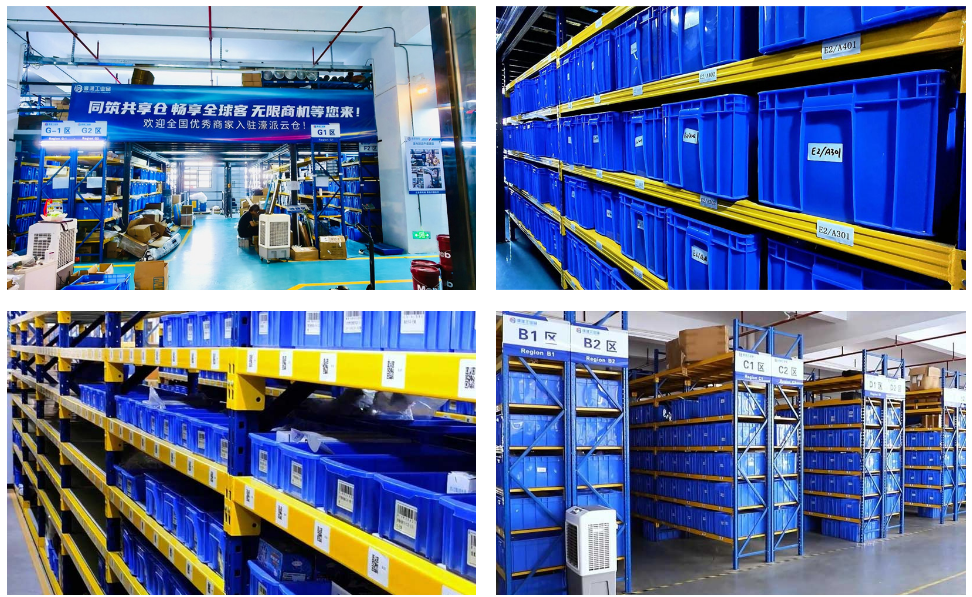
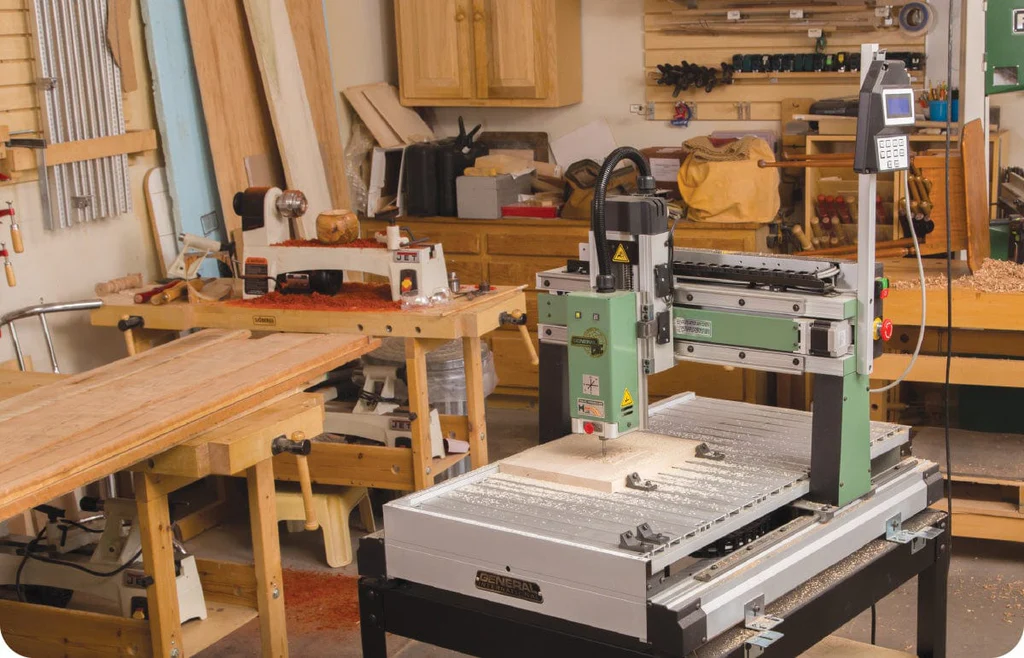
On-Demand Machining Capacity: Their owned machining workshops are equipped with 5-axis CNCs, precision grinders, and gear hobbing machines. This allows them to move beyond stocking standard items. For a rare, obsolete part from a 15-year-old machine, they can often manufacture a one-off batch with a lead time measured in days, not months, providing a critical cost control solution for legacy equipment.
Modular & Upgrade Kits: Sometimes, direct replication is not optimal. Haopai engineers “retrofit kits.” For example, instead of replacing an obsolete proprietary drive controller (a General Woodworking Electrical Part), they design a kit that allows a modern, widely available PLC and servo drive to interface with the old machine, often enhancing its performance in the process. This is high-end woodworking machinery parts localization as an enabler of modernization.
3. Validation, Certification, and Lifecycle Support
Trust is the currency of localization. Haopai builds it through transparent validation.
Rigorous Testing Protocols: Critical parts undergo lifecycle testing in their debugging workshops. A replicated spindle is run at full load for hundreds of hours, monitoring vibration, temperature, and runout. A guide rail is subjected to accelerated wear tests.
Documentation as Standard: Each HAPAI part comes with a technical data sheet mirroring (and often exceeding) the detail of an OEM sheet, providing hardness charts, tolerance tables, and installation torque specifications.
Performance Guarantee & Support: They back their parts with performance warranties and, crucially, the technical support to install and integrate them. This closes the loop, ensuring the imported parts replacement is not a risky swap but a supported transition.
Industry Analysis: The Localization Decision Matrix
| Consideration | Sticking with OEM Imported Parts | Adopting Haopai Localized Replacement | Strategic Implication for the Manufacturer |
| Acquisition Lead Time | Long (4-16 weeks typical). Subject to global logistics. | Short (In-stock: 1-3 days. Manufactured: 1-3 weeks). Agile, domestic supply chain. | Radically reduced downtime. Transforms maintenance from a planning nightmare into a manageable process. Key to cost control solution. |
| Direct Part Cost | High. Includes OEM brand premium, import duties, logistics. | Competitive (Typically 30-60% of OEM cost). Eliminates monopoly pricing. | Immediate and significant reduction in spare parts CAPEX. Frees capital for other investments. |
| Technical Performance | Guaranteed to original spec. | Engineered to meet or exceed original spec. Subject to rigorous validation. Data sheets provided. | Eliminates the "performance gamble." Enables informed, technical decision-making instead of blind brand reliance. |
| Availability & Obsolescence | Discontinued at OEM's discretion. May become unavailable. | On-demand manufacturing for legacy parts. Actively maintains a "living archive" of solutions. | Extends the operational life of capital equipment. Protects against forced early machine retirement. |
| Technical Support & Data | Provided by OEM, but may be slow or costly. | Direct, responsive support from the engineering team that designed the part. Full transparency. | Empowers in-house maintenance teams. Builds internal knowledge and troubleshooting capability. |
| Supply Chain Resilience | Vulnerable to international disruptions. Single point of failure. | Domestic, diversified, and agile. Significantly de-risked. | Builds operational resilience. Enures production continuity in volatile times. Core to high-end woodworking machinery parts localization strategy. |
| Compatibility Assurance | Perfect fit, by definition. | Validated fit and function. Database cross-referencing and pre-shipment testing. | Mitigates the perceived risk of substitution. Turns an unknown into a verified solution. |
From Theory to Chips: A Real-World Localization Victory
Consider "Vertex Furniture," a high-end office system manufacturer with a fleet of late-model European edgebanders. A critical "diamond milling unit" for precise end trimming failed. The OEM quoted a 14-week delivery and a price of €8,500, not including expedited shipping.
Facing a shutdown of their most profitable line, Vertex engaged Haopai. Haopai’s team:
Analyzed: They overnighted the failed unit to their workshop. CMM analysis confirmed dimensional specs, while metallurgy revealed the specific tungsten carbide grade used in the cutters.
Manufactured: Using their 5-axis CNC and partnering with a domestic specialist for the carbide tips, they machined a new housing and assembled the cutter head.
Validated: The new unit was run for 48 hours on a test edgebander, measuring cut quality, vibration, and tool wear against the OEM benchmark.
Delivered: A complete, tested replacement unit was at Vertex’s factory in 18 days.
The cost? Less than 40% of the OEM quote. The performance? Identical cut quality. The outcome? Not only was the line restored quickly, but Vertex also established a standing order for other wear parts, building a cost control solution that insulated them from future shocks. This was imported parts replacement delivering tangible sovereignty.
Frequently Asked Questions (FAQ)
Q1: How can you guarantee the precision and durability of a localized part compared to the German/Italian original?
A: Our guarantee is rooted in process, not promise. We use equivalent or superior raw materials, verified by spectrographic analysis. We manufacture on machinery of comparable precision (German and Japanese CNCs). Most importantly, we validate. We test for hardness, runout, load capacity, and lifespan in our workshops. We provide the test data. The goal is not to be "as good as," but to be a verified, high-performance alternative that stands on its own technical merits.
Q2: What about electronic components and proprietary software? Isn't that harder to localize?
A: It is a different challenge, but not insurmountable. For General Woodworking Electrical Parts like servo drives and PLCs, we often propose a "smart replacement." Instead of cloning a discontinued board, we design a compatible interface that allows a modern, open-architecture component from a global leader (like Siemens, Bosch Rexroth) to work with your machine. This upgrades the system while localizing support. For software, we focus on the hardware interface, ensuring our parts work seamlessly with the machine's existing control system.
Q3: Are your localized parts considered "counterfeit"? Do they void machine warranties?
A: This is a crucial distinction. We do not produce counterfeit goods with fake OEM logos. We produce high-quality, aftermarket replacement parts under our own HAPAI brand. We are an alternative supplier, like many in the automotive industry. Regarding warranties: using non-OEM parts can affect the warranty on the specific OEM part replaced, but typically not the warranty on the entire machine, especially if the machine is beyond its original warranty period. We provide our own warranty on our parts and the workmanship of installation if we perform it.
Q4: How do you handle the localization of highly complex, bespoke assemblies?
A: This is where our transformation from trader to "National High-tech Enterprise" is critical. For complex assemblies like automatic tool changers or robotic feed arms, we engage in system-level reverse engineering. We break down the assembly into its core mechanical, electrical, and pneumatic subsystems. We then source or manufacture each subsystem, often improving the design for maintainability, and reintegrate them. It’s a comprehensive Woodworking Parts and systems solution.
Q5: We have a mixed fleet of machines from different countries and eras. Can one provider really cover it all?
A: This is our core competency. Our business was built on navigating this complexity. Our "Library of Solutions" database is specifically designed to map this diverse landscape. From a 1990s Taiwanese saw to the latest European machining center, our value proposition is being the single, knowledgeable source for imported parts replacement across your entire fleet, simplifying your procurement and creating a unified cost control solution.
Q6: How do we start the process? Do we need to send you the broken part first?
A: The ideal start is a partnership dialogue. Share your machine inventory and your chronic pain points—which machines have the longest downtime, which parts are prohibitively expensive. We can then advise on which parts are prime candidates for localization. When a failure occurs, yes, sending us the broken part allows for perfect analysis. However, for common wear items, we often already have the solution in our database or stock, and can ship immediately based on the OEM part number.
A Call to Builders of Resilient Industry
The era of passive dependence on distant supply chains is ending. The strategic control of your production continuity lies in the ability to maintain your machinery with agility, intelligence, and sovereignty. The pursuit of high-end woodworking machinery parts localization is not a technical side project; it is a core competitive strategy.
Foshan Haopai Mechanical and Electrical Equipment Co., Ltd. stands ready as your partner in this essential transition. We offer more than parts; we offer operational emancipation.
Begin your audit of vulnerability. Contact our engineering team. Provide a list of your most critical, most expensive, or longest-lead-time OEM parts. Let us perform a localization feasibility and savings analysis at no obligation. Discover how our cost control solution can slash your spare parts budget and how our imported parts replacement program can turn weeks of anxiety into days of solution. Choose to build a factory that is truly yours, powered by knowledge and parts you can depend on, from a partner rooted in your own industrial landscape. Let’s build resilience, one precision part at a time.
Conclusion: The New Geometry of Industrial Strength
The search for solutions that promote localization replacement of high-end woodworking machinery parts reveals a new geometry of industrial strength. True power no longer lies solely in owning the best imported machines, but in mastering the ecosystem that sustains them. It is the power to repair, replace, and improve without permission or protracted delay.
Haopai, through its patented innovations and “National High-tech Enterprise” manufacturing prowess, is drafting this new blueprint. They are proving that high-end woodworking machinery parts localization is achievable without compromise—that quality, precision, and innovation can be homegrown. By providing a dependable pipeline of Cutting Equipment Parts and General Woodworking Electrical Parts that meet the world's highest standards, they are doing more than selling components; they are enabling manufacturing sovereignty. In the final calculation, the most valuable part in your warehouse may not be the one with a European logo, but the one that arrived in two days, cost half as much, and keeps your line running with unwavering reliability—the part that represents not just a cost control solution, but a declaration of industrial independence.
