

Walk through any major furniture exhibition today, and a single narrative dominates: personalization. It’s no longer just about choosing a fabric; it’s about tailored dimensions, integrated storage, unique profiles, and seamless whole-home aesthetics. For the ambitious manufacturer, this trend is a double-edged sword. It promises higher margins and customer loyalty, but it unleashes production chaos. The heart of the problem lies in the machinery itself. Traditional woodworking lines were built for repetition, not variation. They are the orchestra playing a single symphony perfectly, now asked to improvise jazz for every customer. This disconnect forces a critical question for forward-thinking factory owners: Which custom non-standard woodworking automation equipment fits personalized production needs? The answer lies not in a catalog, but in a collaborative engineering process—a philosophy embodied by innovators like Foshan Haopai Mechanical and Electrical Equipment Co., Ltd.
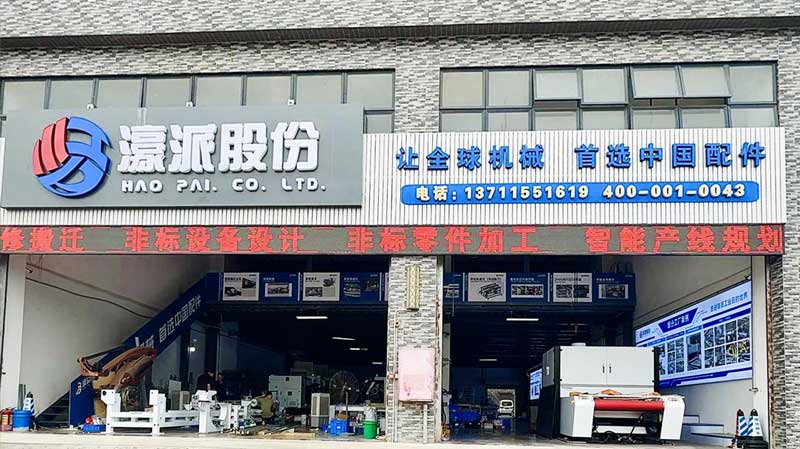
Haopai’s evolution from a specialist in Cutting Equipment Parts to a nationally recognized "High-tech Enterprise" is a direct response to this industry inflection point. They witnessed the growing chasm between off-the-shelf machinery and the bespoke demands of modern furniture making. Their journey led them to a core truth: true personalized production requires personalized machinery. With an independent R&D base, a portfolio of patents, and a team that thinks in solutions, not just specifications, Haopai has positioned itself as the architect of the agile, customizable factory floor.
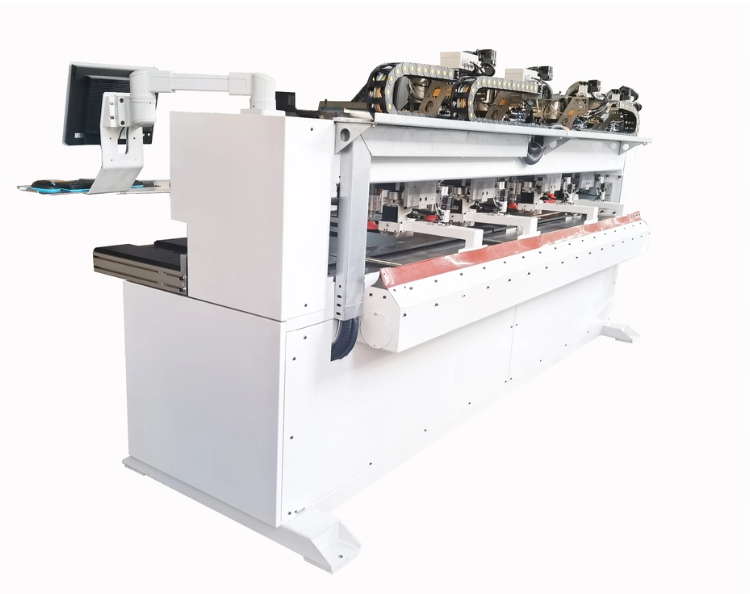
The Personalized Production Paradox: When Flexibility is the Only Constant
The shift from mass production to mass customization upends traditional factory logic. The challenges are systemic:
The Setup Time Monster: Changing over a standard panel saw or edgebander from one job to another can take 30 minutes to an hour. When batches shrink to "lot size one" or small multiples, setup time can eclipse production time, destroying efficiency.
The Material Handling Maze: A single custom order may involve boards of five different thicknesses, three types of edgebanding, and a variety of hardware inserts. Manually routing these components through a fixed line is error-prone and labor-intensive.
The "Zero Defect" Pressure on Variable Inputs: With customization, every piece is unique. A single mis-cut or mis-bored part can’t be swapped from a buffer stock; it means remaking from scratch, delaying the entire order. Precision must be guaranteed across infinite variations.
The Data Disconnect: In a custom workflow, the digital design file (from CAD/CAM software) holds the truth. Getting that data to seamlessly drive disparate, often older, machines is a constant manual translation effort, ripe for error.
Purchasing multiple, highly flexible standard machines from large OEMs is a capital-intensive path, often requiring complete factory re-layout and still falling short of a truly integrated flow. This is where the paradigm must shift from buying equipment to co-creating a system.
The Haopai Blueprint: Engineering Equipment Around Your Process, Not the Other Way Around
Haopai’s approach to non-standard woodworking automation equipment is methodical and deeply collaborative. They don't start with a product; they start with a process diagnosis.
Phase 1: The Deep Dive – Mapping the Custom Workflow
Haopai’s engineers become embedded observers. They don't just look at machines; they trace the journey of a single custom cabinet door from the CAD screen to the packaging crate. They identify:
Pain Points: Where are the manual handoffs? Where do queues form? Which steps have the highest error or rework rates?
Data Flow: How does design information travel? Is it printed, manually entered, or lost between departments?
Physical Constraints: What is the factory footprint? What are the material inflow and finished goods outflow logistics?
Phase 2: The Concept – Designing the "Un-Catalogable" Machine
This is where Haopai’s "National High-tech Enterprise" R&D capability shines. They conceptualize equipment that standard manufacturers wouldn't bother building.
The Agile Material Router: Imagine an automated guided vehicle (AGV) or conveyor system that doesn't just move panels, but identifies them via RFID or QR code, reads their unique cutting/boring instructions from a central MES (Manufacturing Execution System), and delivers them to the correct processing station in the correct sequence—a true customized intelligent production nervous system.
The Universal Processing Cell: Instead of separate saw, edgebander, and boring stations, Haopai might design a multi-function cell. A panel is loaded once. A robot arm with quick-change tooling (saw head, drill bank, edgebanding applicator) performs all operations based on the digital file, eliminating multiple setups and handlings.
Machine Vision as the Enforcer: Cameras aren't just for inspection; they become guiding eyes. A vision system scans a rough-cut board, identifies its exact dimensions and grain orientation, and automatically adjusts the cutting program to optimize yield and match grain patterns for adjoining pieces—a critical furniture customization solution for high-end work.
The "Plug-and-Play" Upgrade Module: For factories not ready for a full cell, Haopai designs modular add-ons. A universal feeding system that can be attached to an existing saw, or a robotic arm that takes over loading/unloading from a CNC router, turning it into a lights-out operation for small batch overnight runs.
Phase 3: The Build & Integrate – From Blueprint to Reality
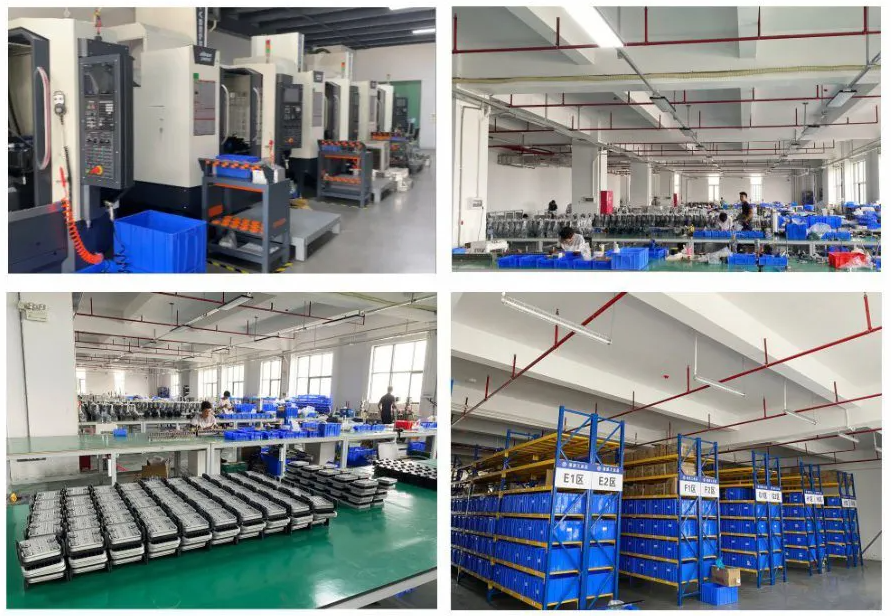
In their own component assembly and machining workshops, Haopai brings the concept to life. They leverage their deep expertise in Cutting Equipment Parts and General Woodworking Electrical Parts to source and integrate the best components for durability and precision. The entire system is then assembled, wired, and put through a rigorous "dry run" in their commissioning workshop, simulating weeks of production to iron out any bugs before it reaches the client's factory.
Industry Analysis: Standard vs. Non-Standard Automation for Custom Furniture
| Production Dimension | Standard "Flexible" Automation | Haopai Custom Non-Standard Automation | Impact on Personalized Production |
| Changeover Time | Reduced, but still significant (10-30 mins). Requires manual parameter input and tooling adjustments. | Near-Zero (Seconds to minutes). Automated changeover driven by digital job file. Robot tool changers, automatic tool height setters. | Enables economically viable micro-batches (lot size of 1-5). Makes true just-in-time sequencing possible. |
| Data Integration | Often limited. Machines may have memory for programs, but central coordination is manual. | Seamless. Equipment is designed as a node on the factory network. MES/CAM data flows directly to machine controls, eliminating manual programming. | Eliminates transcription errors. Ensures the physical product is a perfect match for the digital design intent. |
| Material Handling | Typically linear and fixed. Manual intervention needed for sorting and routing unique parts. | Intelligent and Dynamic. Parts are tracked (RFID/vision) and routed autonomously to required processes based on their unique digital instructions. | Reduces labor for material handling by 70%+. Prevents part mixing and ensures correct processing sequence. |
| Footprint & Scalability | Often large, monolithic machines. Scaling up means duplicating entire lines. | Modular and Dense. Cells are designed for space efficiency. Scaling can be incremental—add another robot module or processing station. | Fits into existing factory layouts more easily. Allows for phased investment, growing automation in step with business. |
| Human Role | Machine operator: loads, monitors, unloads, sets up. | System supervisor & exception handler. The human oversees the flow, handles unique exceptions, and performs final quality audit. | Upskills workforce. Frees skilled laborers from repetitive tasks for higher-value problem-solving and finishing work. |
| Return on Investment (ROI) | Long payback period due to high capital cost. Justified only by high, consistent volume. | Targeted and Faster. Investment is focused precisely on the bottleneck causing the most pain in your custom workflow. ROI is measured in reduced rework, faster throughput, and won contracts. | Achievable for medium-sized enterprises. ROI is not just financial but strategic—enabling the business model of customization. |
From Vision to Veneer: Real-World Custom Automation Scenarios
The High-End Architectural Millwork Shop: This client produced one-of-a-kind wall paneling, cladding, and complex geometric features. No two parts were alike, and setup on their standard CNC was killing productivity. Haopai designed a non-standard woodworking automation equipment solution: a 5-axis CNC router paired with an automated material handling system featuring a 3D vision scanner. The scanner creates a 3D map of each unique raw wood slab, accounting for warpage and thickness variation. This data automatically adjusts the CNC tool paths in real-time to ensure perfect machining depth and surface finish, turning a 2-hour setup and calibration job into a 5-minute automated process. This was the definitive furniture customization solution for their artisanal production.
The "Door-Wall-Cabinet" Integrated Manufacturer: Facing the whole-home trend, this factory struggled to efficiently process thousands of components of wildly different sizes (tall door panels, small drawer fronts, long wall battens) on the same line. Haopai engineered a customized intelligent production line centered on a flexible nesting cell. Sheets are automatically loaded, and an intelligent nesting software dynamically arranges parts from multiple concurrent orders to maximize yield. A single processing cell with a saw and drill head then cuts and bores all parts. A downstream robotic arm sorts the cut parts onto different pallets based on their final assembly order, ready for edgebanding. The system doubled their material yield and reduced throughput time by 40%.
Frequently Asked Questions (FAQ)
Q1: How is "non-standard" equipment more reliable than piecing together standard machines? Doesn't custom mean unproven?
A: This is a key distinction. "Non-standard" refers to the configuration and application, not the core components. Haopai builds its systems using the most reliable, industry-proven Cutting Equipment Parts (spindles, guide rails, saw blades) and General Woodworking Electrical Parts (servo motors, PLCs, sensors). The innovation is in how these proven components are integrated and programmed to solve your unique workflow challenge. The system is thoroughly proven in our own debugging workshop before delivery, de-risking the custom aspect.
Q2: We have a mix of new and old machines. Can custom automation tie them together?
A: This is a Haopai specialty born from their roots in equipment upgrading. Yes, absolutely. A common project is to design an automated material handling and data integration "spine" that connects legacy machines with newer CNCs. Retrofitting older machines with modern controls and sensors allows them to become responsive nodes in a customized intelligent production network, protecting past investments while enabling future flexibility.
Q3: What is the typical lead time for designing and building custom equipment?
A: It varies significantly with complexity. A modular add-on like an automatic loader might take 8-12 weeks from design to delivery. A full, multi-station non-standard woodworking automation equipment line could take 6-9 months. The critical path is the initial collaborative design phase to ensure the solution perfectly fits the need. Haopai’s parallel work in their own workshops streamlines the build phase.
Q4: How do we ensure the custom equipment will work with our future product designs?
A: Haopai designs for adaptability. The core strength of a well-designed custom system is its programmability and modularity. By basing the system on open-control architectures and modular tooling, it is designed to be reconfigured or reprogrammed for new part geometries or processes. The initial design conversation always includes discussing future trends and building in a degree of "unknown" flexibility.
Q5: Is the software proprietary? Will we be locked into your support?
A: Haopai prefers to use industry-standard, open-architecture PLCs and SCADA/MES software platforms where possible. Their value is in the application engineering—programming these standard platforms to orchestrate your unique physical process. They provide full training and documentation, empowering your team. Their "Shared Cloud Warehouse" ensures ongoing access to common General Woodworking Electrical Parts for maintenance.
Q6: We're a mid-sized factory. Can we afford a truly custom solution?
A: The question reframes from "Can we afford it?" to "What is the cost of not solving our flexibility bottleneck?" Haopai works on a targeted ROI basis. Often, the solution is not a whole new line but a single, strategic custom machine or module that unblocks the entire workflow. Their model makes customized intelligent production accessible by focusing investment on the highest-impact area, not on a blanket factory overhaul.
A Call to Architects of the New Factory Floor
The future of furniture manufacturing belongs not to those with the biggest catalog of machines, but to those with the most adaptable production ecosystem. Your competitive advantage will be your ability to execute complexity with simplicity, variation with precision, and personalization with efficiency.
Foshan Haopai Mechanical and Electrical Equipment Co., Ltd. challenges you to envision your ideal workflow. Don't look at your factory as a collection of limitations; see it as a canvas for intelligent engineering.
Start by defining the problem, not the machine. Reach out to Haopai's engineering team. Host a workshop. Walk them through your most challenging custom order from last month. Let them analyze where the friction lies. Together, you can conceptualize the non-standard woodworking automation equipment that turns your biggest production headache into your most reliable profit center. Discover how a tailored furniture customization solution can transform your operation from a job shop battling variability into a streamlined, responsive manufacturing partner for the age of personalization. The blueprint for your unique success is waiting to be drawn.
Conclusion: The End of the Assembly Line, The Rise of the Assembly Ecosystem
The search for which custom non-standard woodworking automation equipment fits personalized production needs ultimately leads to a new industrial philosophy. It signifies the end of the rigid, linear assembly line conceived for Henry Ford's world and the rise of the responsive, networked assembly ecosystem built for today's consumer.
Haopai, with its patented innovations and "High-tech Enterprise" engineering rigor, stands as a guide in this transition. They prove that the tools for mass customization are not fantasies but are buildable, practical realities. By creating customized intelligent production systems that think, adapt, and communicate, they empower manufacturers to deliver on the promise of personalization without sacrificing profitability. In this new era, the most valuable machinery is not the one that does one thing a million times, but the one that can do a million things, one perfect time after another. It is the machinery that makes uniqueness routine.
